On this page
Gold is the one collateral class where owners usually think they already know the answer. The spot price is public, the weight is stamped on the bar, so the arithmetic looks like it should be simple. It isn't — because the number a lender can advance sits two steps below the number on the screen.
ALYRA does not publish a fixed percentage you can borrow against gold bullion. Its published gold-bullion loan range is $50,000 to $5 million, and the amount offered depends on verified weight, purity, refiner or mint, ownership, authenticity, current market pricing and the bullion's suitability as security. [1]
A lender may first reduce a market reference to an assessed collateral value, then lend only a percentage of that figure. [9] As a dated reference, The Perth Mint showed a "Perth Mint Buys" price of $192,004.95 for a 1kg cast gold bar at 11:15am on 14 August 2026. [2]
Summary
Start with a current market reference for the bullion, not its purchase price or a headline spot quote in isolation. A lender may adjust that reference for spreads, verification, storage, insurance, legal risk and time to sell to establish collateral value, then apply a loan-to-value ratio to determine the advance. [9] ALYRA publishes gold-bullion loans from $50,000 to $5 million, but the amount for any holding is set by the individual assessment and written offer. [1] ALYRA's gold bullion lending page sets out how a loan itself proceeds end to end.
This article does not constitute a valuation, legal opinion, financial advice, credit advice, or a guarantee of loan approval, amount, or terms. Worked figures are illustrative only and are not a quote. Loan amounts depend on individual assessment, market conditions, documentation, and ALYRA's approval process.
If a loan proceeds, your bullion is held as security and is at risk if you do not meet your repayment obligations.
Key takeaways
Who this is for
This guide is for Australian owners of investment-grade gold bars or bullion coins who are considering a loan instead of an outright sale. It explains how to build an indicative scenario, what a specialist will verify and why spot price, collateral value and loan amount are three different numbers.
How this was prepared
This article was prepared using ALYRA's public bullion-lending pages and collateral guide, official Perth Mint, AUSTRAC and LBMA sources, World Gold Council research and Queensland pawnbroking legislation. [1]–[12]
The Perth Mint price snapshot used in the worked example was checked at 11:15am on 14 August 2026. Worked figures are illustrative only, not a quote, valuation or promise of approval. This is general information, not financial, legal, tax or credit advice.
Factors at a glance
| Factor | Why it matters | Effect on indicative loan |
|---|---|---|
| Current market reference | Provides a dated starting point for value. | Spot, LBMA benchmark, dealer bid or mint buy price can inform the assessment, but none is itself a loan offer. |
| Fine gold content | Weight and purity determine the quantity of fine gold being valued. | More verified fine gold generally increases gross metal value. |
| Refiner, mint and markings | Recognised producers and clear markings help establish identity and authenticity. | Clear refiner or mint marks, purity, serial details and assay information can reduce verification uncertainty. |
| Ownership and documents | The borrower must show a clear right to pledge the bullion. | Invoices, receipts, bar lists and custody records can support verification; gaps can delay or prevent an offer. |
| Storage and control | The lender needs workable control, access and secure custody arrangements. | Custody can affect verification, insurance, enforcement and execution risk. |
| Form and liquidity | Standard bars and recognised bullion coins generally have clearer resale channels. | Easier realisation can support stronger collateral treatment. |
| Collateral value adjustments | Haircuts, costs and risk allowances can reduce a market reference before lending. | Volatility, spreads, verification, storage, insurance, legal costs and time to sell can lower assessed collateral value. |
| Loan-to-value ratio | The ratio compares the loan amount with assessed collateral value. | This is the step that converts assessed collateral value into an indicative loan amount. |
| Product limits | The requested loan must fit the lender's published product range. | ALYRA publishes gold-bullion loans from $50,000 to $5 million, subject to assessment and approval. |
Start with a market reference
Start with a defensible market reference for the bullion. AUSTRAC defines bullion as precious metal authenticated to a specified quality and fineness and valued according to the market spot price of the contained metal. [3] ALYRA says it verifies weight, purity, refiner or mint, ownership and authenticity with reference to current market pricing before any offer is made. [1]
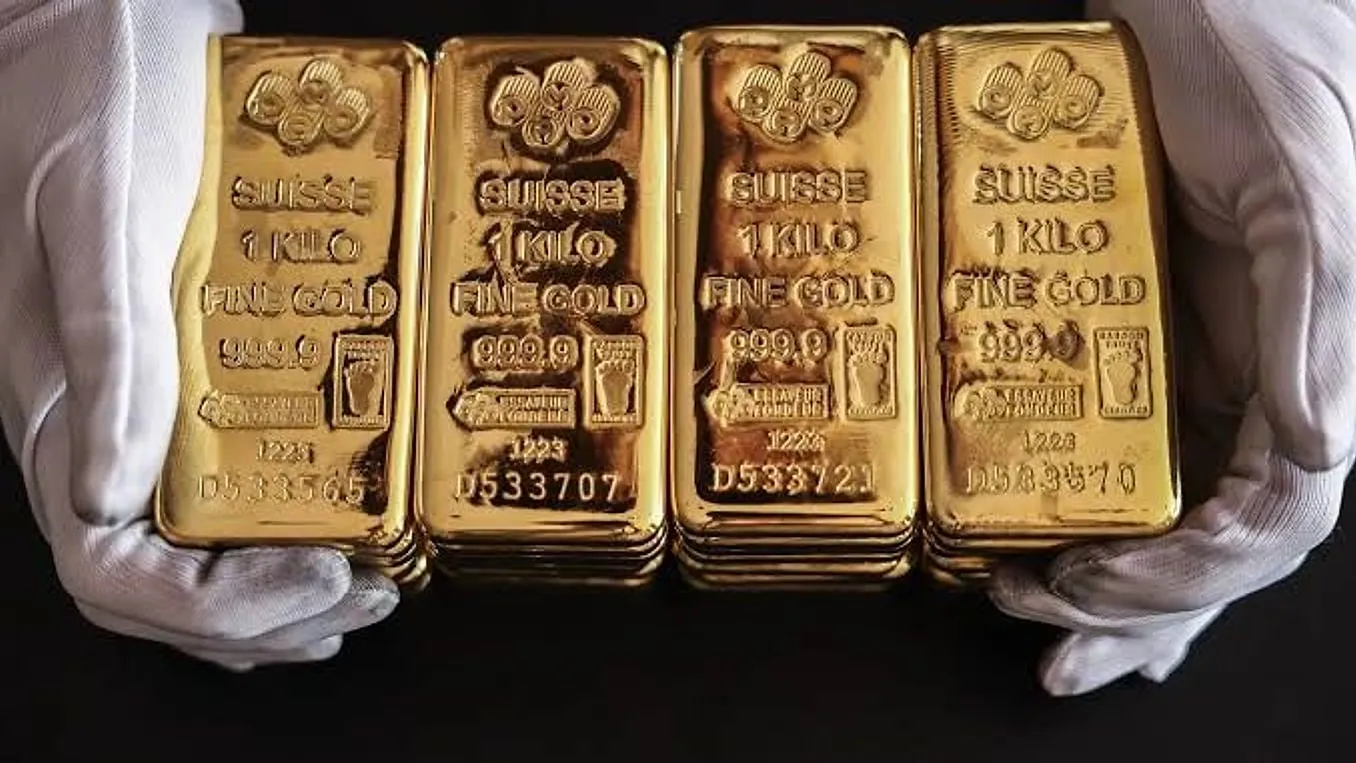
For a dated Australian example, The Perth Mint's page showed an AUD gold spot bid of $6,094.42 per troy ounce at 11:15am on 14 August 2026 and a "Perth Mint Buys" price of $192,004.95 for a 1kg cast gold bar. [2] The 1kg bar is specified at 99.99% fineness and is stamped with The Perth Mint's mark, weight, purity, production month and year, and serial number. [4]
Those figures are not interchangeable. The Perth Mint states that product prices are indicative and finalised at the time of trading, while its selling-to-the-Mint terms say the price it pays depends on the product and the prevailing Perth Mint spot bid less a stated percentage. [2] [12] For a lender, a dealer or mint buy price can therefore be a more realistic sale-channel reference than a retail asking price. [9]
Gold price versus loan value
The gold price is not the loan amount. ALYRA's collateral guide separates market value, collateral value and loan-to-value. It describes collateral value as gross metal value after lender haircuts, costs and risk allowances, and loan-to-value as the loan amount divided by assessed collateral value. [9]
Fine gold content × market reference = gross metal value. Less haircuts and costs = collateral value. Times the approved ratio = the indicative loan.
The actual inputs and ratio are lender-specific and can vary with verification risk, storage, insurance, liquidity, loan term, asset concentration, jurisdiction and other factors. [9]
To illustrate only the final step, if a lender assessed the 1kg holding at $192,004.95 and applied a 60% loan-to-value ratio, the arithmetic would produce an indicative loan amount of about $115,203. ALYRA's collateral guide uses 60% only as an example of how loan-to-value is calculated; ALYRA does not publish 60% as its gold-bullion lending policy, and an actual offer can differ. [1] [9] The wider framework behind those adjustments is set out in ALYRA's guide to gold and bullion as collateral.
Minimum and maximum loan sizes
ALYRA publishes a gold-bullion loan range of $50,000 to $5 million. [1] The bullion must therefore support at least the minimum advance after valuation and lending parameters are applied, and the requested amount must remain within the published product range.
A holding with a market value of $100,000 does not automatically support a $100,000 loan. The lender may recognise a lower collateral value and then lend only a percentage of that assessed value. [9] Very large holdings are also subject to ALYRA's $5 million published maximum and the individual approval process. [1]
What supports a stronger assessment
Clear, verifiable bullion reduces uncertainty. ALYRA says recognised refiners and assayed bars typically support the strongest terms, and its assessment considers weight, purity, refiner or mint, assay and serial numbers, form, condition, market price, ownership records and authenticity. [1]
LBMA Good Delivery standards are relevant as a wholesale-market benchmark, but they should not be confused with a requirement for ordinary 1kg private bullion. LBMA Good Delivery gold bars contain roughly 10.9–13.4kg of fine gold and must have minimum fineness of 995 parts per thousand. [5] By comparison, The Perth Mint's 1kg cast bar is 99.99% pure. [4] ALYRA's public page separately says it considers recognised bars and coins subject to verification, so a private-loan bar does not need to be an LBMA Good Delivery bar. [1]
What can reduce the amount
Missing ownership records, unfamiliar or unclear markings, uncertain authenticity, weak custody evidence or bullion that needs additional testing can increase verification work. [1] [9] The gold may still be genuine, but the lender may need more evidence before deciding whether to accept it and what collateral value to recognise.
Retail premiums also need care. A coin or small minted bar can cost more than its metal content at retail, while a lender is concerned with the amount that can realistically be realised through an available sale channel. [9] The Perth Mint's separate sell and buy prices illustrate why purchase price, headline spot and realisable value can differ. [2] [12]
Gold market context in 2026
Gold entered 2026 after a record 2025. The World Gold Council reported that total gold demand, including OTC, exceeded 5,000 tonnes for the first time in 2025 and that the LBMA PM gold price set 53 new all-time highs during the year. [8]
Volatility then rose sharply in the first half of 2026. The World Gold Council reported an LBMA Gold Price high of US$5,405.00 on 29 January and low of US$4,001.80 on 25 June, with spot gold's 30-day realised volatility rising above 50% before falling below 30% by 26 June. [11] Its April analysis also found that bid-ask spread widening was episodic rather than a sustained collapse in liquidity. [7] For lending, the practical point is to time-stamp the valuation rather than assume today's price will remain unchanged for the life of a loan.
Borrowing versus selling gold
Borrowing and selling solve different problems. With ALYRA's published gold-bullion process, you remain the owner while the gold is held as security and it is returned once the loan is repaid under the agreed terms. [1] An outright sale transfers ownership permanently and does not create a loan repayment obligation — a trade-off examined in ALYRA's guide to liquidity without giving up ownership.
Before proceeding, compare the total loan cost with the value you place on keeping the gold and read the default and redemption terms. ALYRA's public site identifies its pawnbroker licence as Queensland. [1] For a Queensland pawn transaction, section 60 of the Second-hand Dealers and Pawnbrokers Act 2003 sets a three-month redemption period unless a longer period is agreed; section 62 deals with unredeemed property after that period. [10] Other transaction structures or jurisdictions may differ.
What specialists ask
- What form of gold do you hold — cast bar, minted bar or bullion coin? — form affects verification, marketability and the likely resale channel;
- Who is the refiner or mint? — recognised producers and clear markings can reduce authentication and pricing uncertainty;
- What are the exact weight and purity markings? — fine gold content is the base input to the valuation;
- Do you have serial numbers, assay certificates or original packaging? — these can strengthen identification and reduce verification uncertainty;
- Where is the bullion held now? — custody, access and control must be workable for a secured loan;
- What documents show ownership? — a lender needs evidence that the borrower has the right to pledge the gold;
- Is the bullion already pledged or subject to another claim? — competing interests can affect whether the asset can be accepted as security;
- How much do you want to borrow and for how long? — the requested amount and term must fit the assessed value, product range and lending parameters.
Common mistakes
Spot is a reference price, not a loan offer; the lender may apply collateral-value adjustments and then a loan-to-value ratio.
A hypothetical percentage is a scenario tool, not ALYRA policy or an expected offer.
Gold prices and dealer spreads change, so a current valuation is more relevant.
Standard bullion, collectible coins, jewellery and scrap have different verification and resale characteristics.
Missing invoices, serial numbers, bar lists or assay information can delay the assessment or require additional verification.
Pledged gold is at risk if loan obligations are not met; redemption and sale rights depend on the written terms and applicable law.
Checklist for the reader
Frequently asked questions
How much can I borrow against 1kg of gold in Australia?
There is no single published percentage that applies to every 1kg bar. At 11:15am on 14 August 2026, The Perth Mint showed a “Perth Mint Buys” price of $192,004.95 for a 1kg cast gold bar. If that figure were also the lender's assessed collateral value and a 60% loan-to-value ratio were applied, the arithmetic would be about $115,203. This is an illustration only: ALYRA does not publish 60% as its gold-bullion lending policy or as an expected offer.
What percentage of my gold value can I borrow?
ALYRA does not publish a fixed gold-bullion loan-to-value percentage. Its published process says the amount depends on the bullion and its suitability as security after checks of weight, purity, refiner, ownership, authenticity and current market pricing. The percentage and resulting amount are therefore determined by the specific assessment and written offer.
Is a gold-backed loan based on the spot price?
Spot price can be a starting reference, but it is not the same as the loan amount. A lender may use spot, an LBMA benchmark, a dealer bid or a mint buy price to inform market value, then apply collateral adjustments and a loan-to-value ratio.
Can I borrow against Perth Mint gold bars?
ALYRA says it considers recognised investment-grade bars, subject to verification and approval. The Perth Mint's 1kg cast gold bar is 99.99% pure and stamped with its mark, weight, purity, production date and serial number, but acceptance and loan amount still depend on the full assessment.
Can I borrow against gold coins?
Yes. ALYRA says recognised investment and collectible gold coins may be considered, subject to verification of weight, purity, condition and authenticity. Its published page says value is based on verified weight and purity with reference to current market pricing, alongside any collectible premium for recognised coins; the amount available still depends on the full assessment.
Do I keep ownership of my gold while I borrow?
Under ALYRA's published process, you remain the owner while the bullion is held as security, and the gold is returned after the loan is repaid under the agreed terms. The asset is nevertheless at risk if repayment obligations are not met.
What purity does gold need to be for a bullion loan?
ALYRA does not publish a single minimum fineness for every private bullion loan; it verifies the purity of each holding. As market references, The Perth Mint's 1kg cast bar is 99.99% pure, while LBMA Good Delivery gold bars must meet a minimum fineness of 995 parts per thousand. These are market specifications, not a published ALYRA minimum.
What documents should I provide with my gold?
Useful records include purchase invoices, receipts, assay certificates where available, serial numbers, bar lists and storage or custody statements. They help the lender verify identity, ownership and authenticity and can reduce the need for additional checks.
What happens if the gold price falls after I take the loan?
A lower gold price can reduce collateral value, but the effect on an existing loan depends on the written terms. ALYRA's general collateral guide notes that some facilities may require repayment, additional collateral or partial sale if collateral value falls, depending on the loan terms. ALYRA's public gold-bullion page does not state a standard automatic trigger, so the written provisions dealing with collateral value, repayment and default are what matter.
What happens if I do not repay a gold-backed pawn loan?
Your pledged gold is at risk if you do not meet the repayment obligations. For a Queensland pawn transaction, the statutory redemption period is three months from the day the property is pawned unless a longer period is agreed; after the period expires, the Act deals with unredeemed property and the circumstances in which it may be sold. Other transaction structures or jurisdictions may differ, so the written terms and applicable law matter.
Sources and references
Numbered citations in the article correspond to the sources below. Sources checked 14 August 2026.
- ↑ AUSTRAC — Bullion dealers overview
- ↑ The Perth Mint — 1kg Gold Cast Bar
- ↑ LBMA — Good Delivery technical specifications
- ↑ LBMA — Precious Metal Prices
- ↑ World Gold Council — Has gold's performance structurally changed?
- ↑ World Gold Council — Gold Demand Trends: Q4 and Full Year 2025
- ↑ ALYRA — Gold and bullion as collateral: a practical guide
- ↑ Queensland Government — Second-hand Dealers and Pawnbrokers Act 2003
- ↑ World Gold Council — Gold Mid-Year Outlook 2026
- ↑ The Perth Mint — Terms and Conditions for selling bullion

Elijah works across private asset assessment, asset-backed finance and high-value collateral strategy, focusing on how realisable value forms in specialist markets such as bullion, fine watches, jewellery and other private assets.
His approach considers liquidity, condition risk, documentation strength, likely sale channel and time-to-sale rather than advertised price alone.